
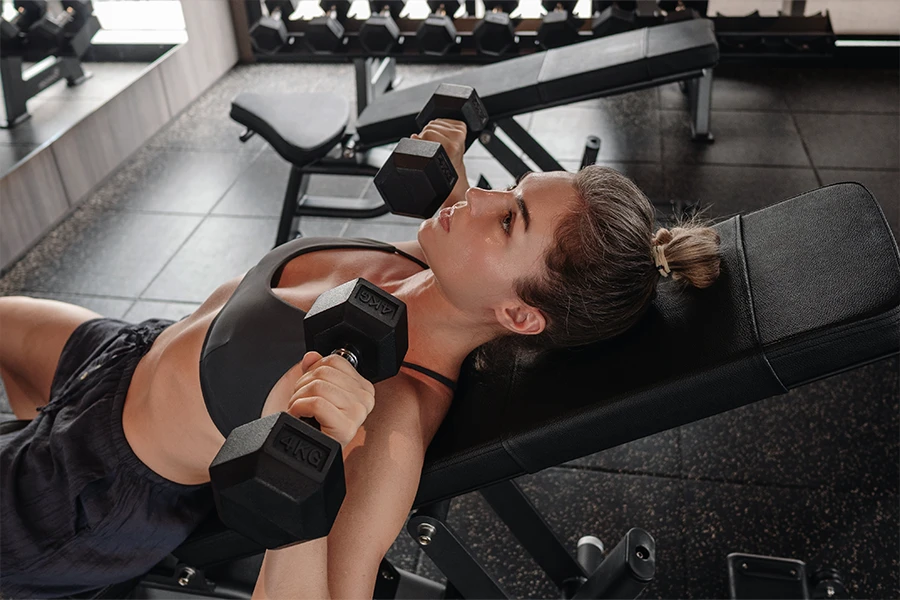
To build your upper chest, train the clavicular head of the pec with incline movements: incline presses and low-to-high flyes performed on a bench set to roughly 30 to 45 degrees. That angle shifts the work toward the upper chest. A good upper chest workout leans on incline pressing first, then adds flyes and cable work to finish.
What Is The Upper Chest, Exactly?
Your chest is one muscle, the pectoralis major, but its fibers run in two directions from two attachment points. The sternal head makes up the broad lower and middle chest. The clavicular head, what people call the upper chest, originates along your collarbone, and its fibers run upward and inward toward your shoulder. When you hear someone talk about building the “upper pecs,” this clavicular head is the target.
Here is the honest part that most articles skip: you cannot fully isolate the upper chest. Every press and fly works the whole muscle to some degree. What you can do is bias the work toward those upper fibers by changing the angle at which you press. That is the entire idea behind an upper chest workout, not a separate muscle, but a smarter angle of attack on the one you already have.
Why does the top of the chest matter so much to how a physique looks? Because well-developed clavicular fibers give the chest its shelf, the line that separates the chest from the shoulders and fills in the area just below the collarbone. A chest built only with flat pressing can look full in the middle, but flat and undefined up top. That visual gap is exactly what a focused upper chest workout closes, and it is why so many lifters who already bench plenty still feel like something is missing.
Why Won’t My Upper Chest Grow?
If your upper chest lags, the usual reason is simple: your training is mostly flat. The flat barbell or dumbbell bench press is the lift most people default to, and it loads the broad mid-chest. Spend every chest day flat and the upper fibers never get a dedicated stimulus.
The fix is to make incline work a real priority, not an afterthought you tack on when there is time. That often means leading your session with an incline press while you are fresh and strong, instead of saving it for the end. The other common culprit is angle: many lifters set the bench too steep, which turns the lift into a shoulder press. We will fix both in this upper chest workout. If your whole chest needs work, our best chest workouts for strength and size guide covers the full picture; this article zeroes in on the top.
What Angle Is Best For An Upper Chest Workout?
Set the bench to somewhere between 30 and 45 degrees. That range reliably increases upper-chest involvement without handing the lift over to your front shoulders. Lower than about 30 degrees, and you are essentially flat pressing. Steeper than 45 to 60 degrees, and the movement becomes an overhead press, with the shoulders doing most of the work and the upper chest doing less.
TruFit cue: “If you feel it burning in the front of your shoulders instead of your upper chest, lower the bench a notch.” A small adjustment in angle changes everything about where the work lands. This is exactly where an adjustable incline bench earns its keep; you can fine-tune the angle to your body rather than settling for a fixed setup.
A practical way to find your angle: start at about 30 degrees and press a light set. Notice where you feel it. If it is mostly upper chest, that is your spot. If it drifts into your shoulders, you are likely already too steep; try a slightly lower setting. Bodies differ, and the perfect incline for one member is a touch high or low for another. The 30-to-45 range is the window; your job is to find the exact notch inside it where your upper chest does the work. Once you know your number, keep it consistent so you can actually track progress week to week.
The Best Upper Chest Exercises
These five movements form the backbone of an effective incline-focused chest session. The presses build size and strength; the flyes and cable work refine it. Each includes the cue we use with members.
Incline barbell press
With the bench at 30–45 degrees, unrack the bar over your upper chest, lower it under control to just below your collarbone, and press back up. The barbell lets you load the most weight, which makes this the strength anchor of the session.
TruFit cue: “Touch high, the bar comes down to your upper chest, not your sternum, and keep your shoulder blades pinned back and down.” Touching too low turns it back into a flat-ish press.
Incline dumbbell press
Same angle, but with a dumbbell in each hand. The dumbbells travel a longer path and let each side work independently, which is great for evening out a stronger and weaker side. They also let you press the weights slightly together at the top to squeeze the upper chest. For the full rundown on pressing with dumbbells, see our chest workouts with dumbbells guide.
TruFit cue: “Drive up and slightly in, like you are making an A above your collarbone.” That inward finish is what brings the clavicular fibers into the lift.
Incline dumbbell fly
On the same incline, hold the dumbbells above your chest with a soft elbow bend and palms facing each other. Open your arms in a wide arc until you feel a stretch across the upper chest, then bring them back together over your collarbone. The elbow angle stays fixed; this is a fly, not a press.
TruFit cue: “Lead with your pinkies coming up and hug the weights together at the top.” Keep the load light; the fly is about the stretch and squeeze, not heavy weight.
Low-to-high cable fly
Set the cable pulleys low, take a handle in each hand, and sweep your arms upward and inward so they meet in front of your upper chest. Because the resistance pulls from low to high, this movement matches the upward direction of the clavicular fibers almost perfectly, which is what makes it one of the most targeted upper-chest moves there is. Our low-to-high cable fly guide breaks down the setup in detail.
TruFit cue: “Think of throwing an uppercut with both hands, finish with your knuckles high and together.” Constant cable tension keeps the upper chest working through the whole arc.
Incline push-up
A bodyweight option with the logic flipped: to hit the upper chest with a push-up, you elevate your feet, not your hands, so you press at a decline relative to your body, which loads the upper fibers. It is a useful finisher and a solid at-home choice when you have no bench or cables.
A Follow-Along Upper Chest Workout
Here is a complete upper chest workout built from the movements above. It runs about 40–50 minutes with warm-up and rest. Rest 60–90 seconds between sets, a touch longer after the heavy press.
- Warm-up (5–8 min): light cardio plus 2 easy sets of the incline press with an empty bar or light dumbbells to groove the angle.
- Incline barbell press, 4 sets of 6–10 reps: your heaviest movement, done first while you are fresh.
- Incline dumbbell press, 3 sets of 8–12 reps: more range of motion and an independent press for each side.
- Low-to-high cable fly, 3 sets of 12–15 reps: targeted upper-chest work with constant tension.
- Incline dumbbell fly, 2 sets of 12–15 reps: a lighter finisher emphasizing the stretch.
Run this once a week as a dedicated session, or fold the first two movements into your regular chest day. To balance all that pushing, pair it across the week with pulling work, our chest and back workout shows how, and adding dumbbell tricep work rounds out the pressing muscles.
Can You Train The Upper Chest At Home?
Yes. A pair of adjustable dumbbells and an incline bench cover almost everything in this upper chest workout; incline presses and flyes both transfer directly. With no bench at all, feet-elevated incline push-ups and a resistance band pressed from low to high will still bias the upper chest and build a real base.
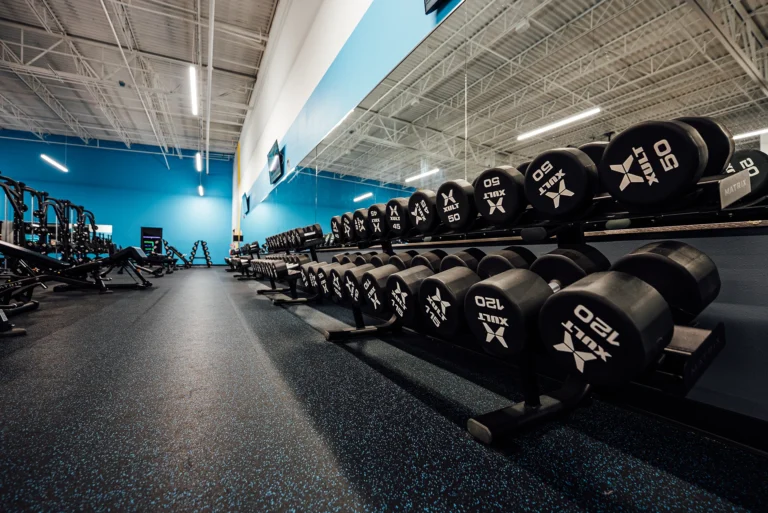
The limitation at home is loading. Once you can do clean reps with the dumbbells you own, progress gets harder without heavier weight or cables. That is the point where training at a club opens things up: a full rack of dumbbells, an adjustable bench, and a cable station let you keep adding stimulus as you get stronger.
How Often Should You Train The Upper Chest?
Most people do well giving the upper chest focused attention once or twice a week, with at least 48 hours of recovery between hard chest sessions. If you train chest twice a week, make one of those days incline-led; that single change is often all it takes to bring a lagging upper chest up over a few months.
You do not need a separate upper-pec session every workout to see progress. Prioritizing incline work, leading with it, giving it your best energy, matters far more than sheer volume. Consistent, well-angled incline pressing over time is what builds the upper pecs, not one marathon chest day.
How To Keep Your Upper Chest Progressing
Picking the right movements is only half the job. The other half is giving the muscle a reason to grow week after week, which comes down to progressive overload, gradually asking it to do a little more over time. You do not need to chase a new personal record every session. Small, steady steps add up faster and last longer.
In practice, that looks like adding a rep or two to a set before you add weight, then bumping the load once you hit the top of your rep range with clean form across all your sets. Keep a simple log of your incline press numbers so you are not guessing. When the weight starts moving easily at your chosen angle, that is your signal to add a small jump, not to crank the bench steeper or sacrifice the touch point that makes it an upper chest workout in the first place.
Common Mistakes (And The Cues We Use)
These are the upper-chest errors our trainers correct most often:
- Setting the bench too steep. Past 45–60 degrees, the shoulders take over. Keep it moderate so the upper chest stays in charge.
- Touching too low on the press. Lowering the bar to your sternum trains the mid-chest. On an incline, the weight comes down to the upper chest, just below the collarbone.
- Saving incline for last. If the upper chest lags, train it first while you are fresh, not after you have tired out on flat pressing.
- Going too heavy on flyes. Flyes are a squeeze, not a max-effort lift. Heavy flyes wreck form and stress the shoulder.
- Only ever pressing flat. The single most common reason an upper chest never grows. Make incline a permanent part of the week.
How We Coach The Upper Chest At Trufit
When a member tells us their upper chest will not grow, the first thing we look at is their incline angle and where they touch the bar. Nine times out of ten, the bench is too steep, or the weight is coming down too low; both quietly turn an upper chest workout into something else. If you want help finding your ideal angle, a TruFit personal trainer can set it with you in a single session and build an upper chest workout around your starting point.
The right angle when building your upper chest changes everything. Grab a free pass at your local TruFit and work with a personal trainer who can dial in your incline and build an upper chest workout around your goals. We will help you build a more powerful you, one well-angled rep at a time.
Train Smarter, See Results Faster
Frequently Asked Questions
What is the best upper chest exercise?
The incline press (barbell or dumbbell) on a bench set to about 30–45 degrees. It lets you load the upper chest with the most weight. Low-to-high cable flyes are a close second because they match the direction of the upper-chest fibers.
What angle is best for an upper chest workout?
Roughly 30 to 45 degrees. That range biases the upper chest without letting the front shoulders take over. Steeper than about 45–60 degrees turns the movement into a shoulder press.
Can you isolate the upper chest?
Not completely. Every press and fly works the whole pec. You can bias the upper (clavicular) fibers with incline angles and low-to-high movements, but you cannot switch the rest of the chest off.
Is incline or flat better for the upper chest?
Incline. Flat pressing loads the broad mid-chest, while incline shifts the emphasis to the upper fibers. A complete chest plan uses both, but upper-chest development specifically needs incline work.
Why won’t my upper chest grow?
Almost always because the training is mostly flat, the incline bench is set too steep, or incline work is saved for last when you are already tired. Prioritize a moderate incline early in the session.
How often should I train the upper chest?
Once or twice a week with at least 48 hours of recovery between hard sessions. Making one chest day incline-led is usually enough to bring a lagging upper chest up over a few months.