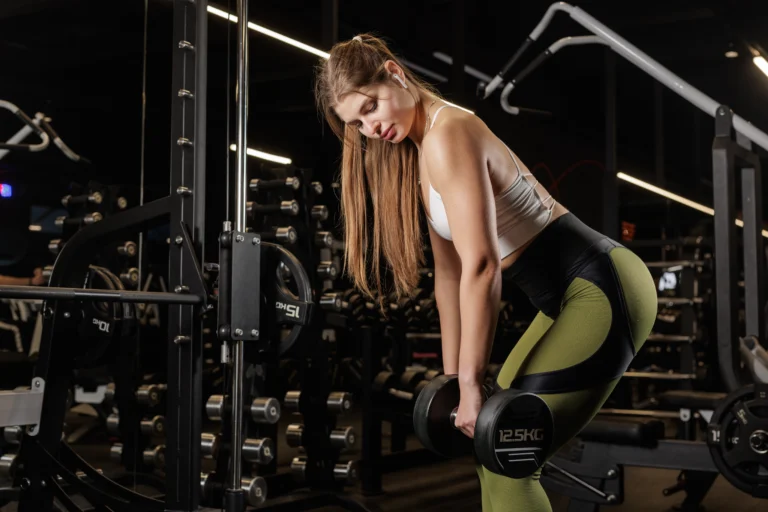

The best oblique exercises are the Russian twist, side plank, side plank rotation, bicycle crunch, cable woodchopper, and standing dumbbell side bend. Together, they train all three jobs the obliques do, which are rotating your torso, bending it to the side, and resisting rotation to stabilize the spine. Crunches alone never reach these muscles.
Your obliques run along the sides of your waist and do far more than shape your midsection. They power every twist, throw, and side bend, and they brace your spine when you carry a heavy bag or load a barbell. Most people train the front of the core with crunches and planks, then wonder why their rotation feels weak and their lower back aches. The six moves below fix that, and each one includes the cues we use on the floor so you feel the work in the right place. TruFit Athletic Clubs has the cable stacks, dumbbells, and mat space for all of them.
What are the oblique muscles?
Your obliques are the muscles along the sides of your abdomen, and they come in two layers. The external obliques sit on the surface and run diagonally down toward the center, while the internal obliques sit underneath and run in the opposite direction. The two layers work together on opposite sides, so your right external oblique and left internal oblique fire as a pair to rotate your trunk.
That partnership is why oblique training looks different from standard ab work. These muscles handle rotation when you twist, lateral flexion when you bend to one side, and anti-rotation when they brace to keep your torso from turning under load. Standard crunches and sit-ups mostly hit the rectus abdominis down the front and do little for the sides, so you need movements that twist, side bend, and resist rotation to reach the obliques. Strong ones also take pressure off your spine, which is part of why a weak set often shows up as nagging lower back discomfort.
What are the 6 best oblique exercises?
These six cover every function of the obliques and span bodyweight, cable, and dumbbell work, so you can build a full side oblique workout from them. Pick three or four, train them twice a week, and aim for three sets of 10 to 15 reps per side on the dynamic moves.
How to do the Russian twist
The Russian twist is the most recognized oblique exercise because it combines a lean-back hold with rotation, which lights up both layers at once.
- Sit on the floor with your knees bent and heels down, then lean your torso back to about 45 degrees so your abs switch on.
- Clasp your hands or hold a dumbbell at your chest, and lift your feet off the floor only if you can keep your back straight.
- Rotate your torso to the right, leading with your ribs rather than just swinging your arms, and tap the weight beside your hip.
- Rotate smoothly to the left without letting your back round. That is one rep per side.
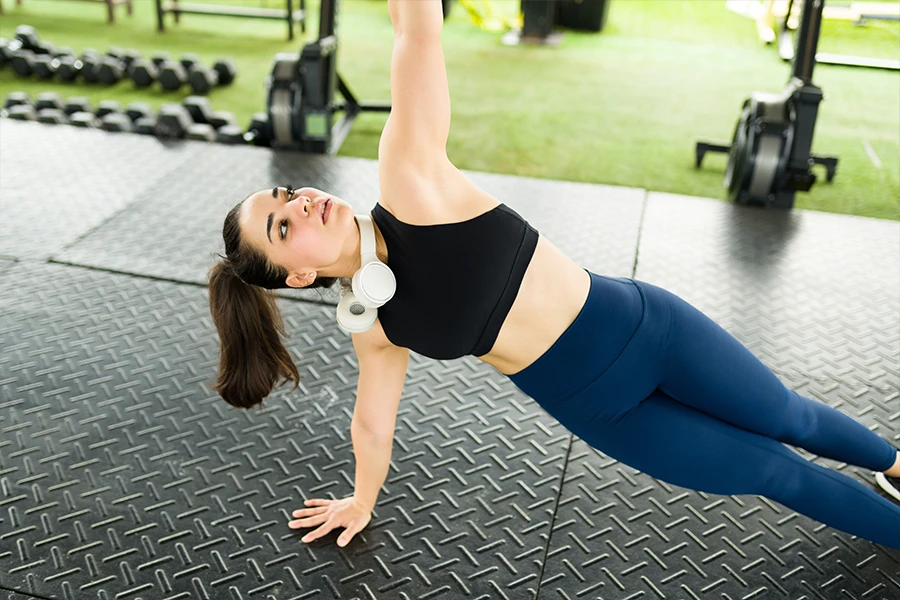
How to do the side plank
The side plank trains anti-rotation and lateral stability, and it is the safest place to start building oblique endurance.
- Lie on one side with your legs stacked and your forearm flat on the floor under your shoulder.
- Brace your core and lift your hips until your body forms a straight line from head to heels.
- Hold for 20 to 30 seconds without letting your hips sag or roll forward.
- Lower with control and repeat on the other side. Even out the time on both sides.
How to do the side plank rotation
Adding rotation to the side plank turns a static hold into a dynamic move that trains the obliques through their full range.
- Set up in a side plank with your top arm extended toward the ceiling.
- Keeping your hips lifted, reach your top hand down and thread it under your torso as you rotate your trunk.
- Pause when you feel the obliques engage, then reverse the motion and open back up to the start.
- Move slowly and controlled rather than forcing the range. Repeat for reps, then switch sides.
How to do the bicycle crunch
The bicycle crunch combines flexion and rotation, which is exactly the combination that recruits the obliques hardest among floor moves.
- Lie on your back with your hands lightly behind your head and your knees lifted to a tabletop position.
- Press your lower back into the floor and bring one knee toward your chest while extending the other leg.
- Rotate your torso so the opposite elbow travels toward the bent knee, leading with your shoulder, not your neck.
- Switch sides in a smooth pedaling motion. Keep it slow enough that you feel each rotation.
How to do the cable woodchopper
The cable woodchopper trains rotational power against resistance, which is the part of oblique training most home routines skip entirely.
- Set a cable pulley to the high position and stand side-on to the stack, gripping the handle with both hands.
- Brace your core and pull the handle down and across your body toward the opposite hip, rotating through your trunk.
- Keep your arms fairly straight so the rotation comes from your core rather than your shoulders.
- Return under control to the start without letting the weight yank you back. Finish your reps, then face the other way.
How to do the standing dumbbell side bend
The side bend isolates lateral flexion, the side-bending job that the other five moves only touch lightly.
- Stand tall holding a dumbbell in one hand at your side, feet hip-width apart.
- Keeping your chest forward, bend slowly to the weighted side, lowering the dumbbell along your leg.
- Squeeze the opposite oblique to pull yourself back up to standing, moving only side to side.
- Finish all reps on one side before switching the weight to the other hand. Avoid leaning forward or back.
The people who slow the twisting moves down and lead with the ribs feel their obliques far more than the ones racing through reps. To round out your midsection, pair this side work with a focused lower ab workout session, and add a few plank variations for the front and deep core so the whole trunk develops evenly.
Train your core at TruFit
The cable stacks, dumbbells, and open mat space you need for a complete oblique workout are all on the TruFit floor, with coaches who can check your form and keep your lower back safe. Book a session with a TruFit personal trainer and build a core routine that fits your goals.
Frequently asked questions
What is the best oblique exercise?
There is no single best move, since the obliques do three different jobs. The Russian twist is the most effective single exercise for rotation, the side plank is best for stability, and the cable woodchopper builds the most rotational power. Training a mix of all three functions beats hammering any one exercise.
Do Russian twists work your obliques?
Yes. The Russian twist combines a lean-back hold with trunk rotation, which recruits both the internal and external obliques strongly. Lead the movement with your ribs and torso rather than just swinging your arms, and the exercise becomes far more effective.
How often should you train your obliques?
Two to three sessions a week is plenty for most people. Your obliques recover like any other muscle, so they need rest days to adapt and grow stronger. Daily training offers diminishing returns and can leave the area sore without extra benefit.
Will oblique exercises make your waist bigger?
For most people, no. Bodyweight oblique work strengthens the muscle without adding much size, and a strong, toned core tends to look leaner. Very heavy, high-load side bends over a long period can thicken the muscle slightly, but typical training in the 10 to 15 rep range will not widen your waist.
Can you do oblique exercises every day?
It is not the best approach. Like any muscle, the obliques grow during recovery, not during the work itself, so daily training can hold back progress and raise your risk of strain. Space your sessions out and focus on controlled reps with good form instead.