
If building strong, defined shoulders is part of your fitness goals, the shoulder press is one of the most effective strength training exercises you can add to your routine. This classic upper body movement builds pressing strength, improves shoulder stability, and helps develop balanced muscle across your delts, triceps, and upper chest.
At TruFit Athletic Clubs, we believe strength training should feel empowering and approachable. Whether you are new to the gym or focused on leveling up your shoulder day, learning proper shoulder press form is key to getting results safely and consistently.
What Is a Shoulder Press
The shoulder press is a compound upper body exercise that involves pressing weight overhead in a controlled vertical path. It can be performed with dumbbells, a barbell, a machine, or even resistance bands. Because it is a compound movement, it works multiple muscle groups at once and allows you to lift more weight than isolation exercises.
You might hear it referred to as an overhead press, dumbbell shoulder press, or barbell shoulder press. While the equipment may change, the movement pattern remains the same: pressing weight upward while maintaining control and stability.
Shoulder Press Muscles Worked
The shoulder press primarily targets the deltoids, especially the anterior deltoids at the front of the shoulder. It also recruits the lateral delts, triceps, and upper chest, making it one of the most effective exercises for overall shoulder development. Your core and upper back muscles engage throughout the movement to stabilize your body and keep the weight moving in a controlled path.
Because the movement requires coordination and balance, your core and upper back muscles work behind the scenes to keep your spine aligned. This makes the shoulder press a powerful addition to any upper body workout focused on building strength and muscle.

How to Do a Dumbbell Shoulder Press with Proper Form
Mastering proper shoulder press form will help you build strength safely while protecting your shoulders and lower back.
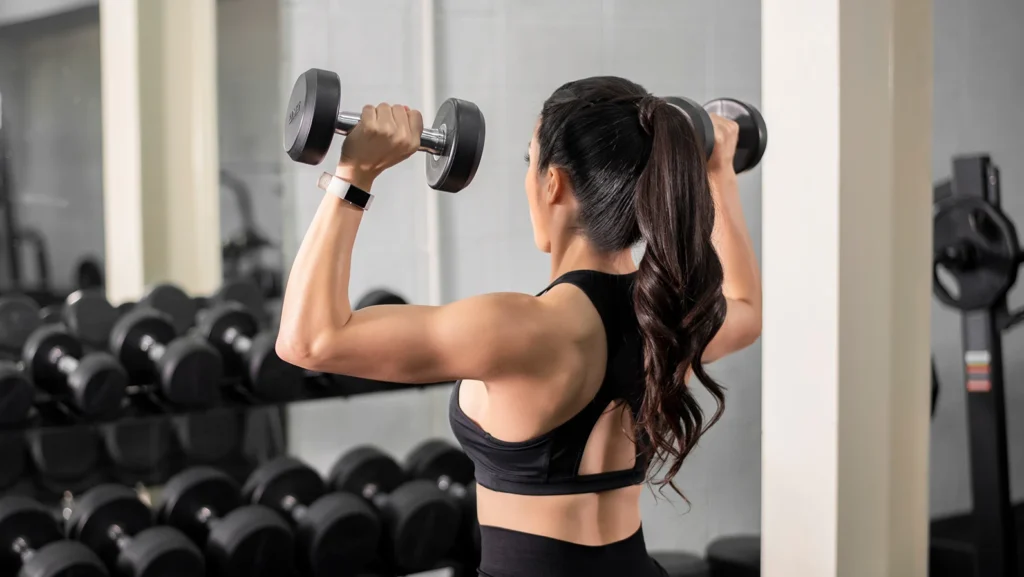
Start seated or standing with a dumbbell in each hand at shoulder height. Your palms can face forward or slightly inward. Keep your chest lifted and your core engaged.Press the dumbbells upward until your arms are fully extended overhead, stopping just short of aggressively locking your elbows. Keep your ribs down and avoid leaning back as the weight moves upward.
Focus on moving in a straight path and avoiding excessive arching in your lower back. If you feel your back taking over the movement, reduce the weight and reset your posture.
Key Form Tips for Better Results
- Keep your shoulders down and away from your ears as you press.
- Avoid flaring your elbows too far out to the sides.
- Maintain steady breathing by exhaling as you press the weight up and inhaling as you lower it.
- Small adjustments in form can make a big difference in how effectively the exercise targets your shoulders.
Benefits of the Shoulder Press
The shoulder press helps build upper body strength, improve shoulder stability, and increase pressing power. Because it trains multiple muscles at once, it supports muscle growth while also improving coordination and control. Stronger shoulders can also improve posture and make everyday movements like lifting, reaching, and carrying feel easier.
Common Shoulder Press Mistakes to Avoid
One of the most common mistakes is using too much weight, which often leads to leaning back and placing stress on the lower spine. Another issue is pressing too far forward instead of directly overhead, which reduces shoulder activation.
Rushing through repetitions is another frequent error. Slowing down each rep increases time under tension, improves muscle activation, and helps you maintain better control throughout the lift. Controlled movement increases time under tension and supports muscle growth.
Shoulder Press Variations to Try
Adding shoulder press variations to your workout can help you break through plateaus, challenge your muscles in new ways, and prevent training stagnation.
Seated Shoulder Press
The seated shoulder press provides added stability and can help reduce lower body involvement. This variation is great for focusing directly on shoulder strength.
Standing Overhead Press
The standing overhead press challenges your core and balance while building full upper body strength. It is a functional option for those looking to improve total body stability.
Machine Shoulder Press
A machine shoulder press offers guided movement, making it ideal for beginners or anyone working on refining form.
Arnold Press
The Arnold press adds rotation to the movement, increasing activation in multiple parts of the deltoid muscle and adding variety to your shoulder day.
Barbell Shoulder Press
The barbell shoulder press allows you to lift heavier weight and build overall pressing strength. It can be performed standing or seated and is often used in strength focused training programs.
How to Add Shoulder Press to Your Workout Routine
The shoulder press is typically programmed on upper body or push focused days. Because it is a compound movement, it often appears early in the workout when your energy levels are highest.
Aim for moderate to challenging weight with proper control. For muscle growth, many lifters use rep ranges between 6 and 12. For strength focused training, lower reps with heavier weight may be used, provided form stays consistent and controlled. Pairing the shoulder press with lateral raises, rear delt fly exercises, and triceps work can create a well rounded upper body session.
At TruFit Athletic Clubs, you have access to a full range of free weights, strength machines, and group fitness classes that support every stage of your fitness journey.
Is the Shoulder Press Safe for Your Shoulders
When performed with proper technique and manageable weight, the shoulder press is safe and effective. Problems typically occur when lifters use excessive weight or arch their lower back. Keeping your core engaged and pressing in a straight line overhead helps reduce unnecessary strain.
Why the Shoulder Press Is Essential for Your Fitness Goals
Strong shoulders play a major role in everyday movement and athletic performance. From lifting and carrying to pushing and reaching overhead, shoulder strength supports functional movement patterns that carry over into daily life.
If your goal is building muscle, increasing upper body strength, or improving overall physique, the shoulder press delivers results. Combined with consistent strength training and a supportive gym environment, it can help you make steady progress toward your goals.
Train Upper Body Strength at TruFit Athletic Clubs
At TruFit, we are committed to helping you feel confident and capable in the gym. Our spacious facilities, affordable gym memberships, and motivating community make it easier to stay consistent with your workouts.
Ready to build stronger shoulders and elevate your upper body workouts. Join TruFit Athletic Clubs today and experience a gym designed to support your strength training goals. Get Started & Take The Next Step Toward A Stronger You
Frequently Asked Questions About the Shoulder Press
- What muscles does the shoulder press work?
The shoulder press primarily targets the deltoids, especially the front of the shoulders. It also works the triceps, upper chest, and stabilizing muscles in the core and upper back. - Is the shoulder press good for beginners?
Yes, the shoulder press is beginner friendly when performed with light to moderate weight and proper form. Machine variations can be especially helpful for learning the movement pattern. - Should I do shoulder press seated or standing?
Both options are effective. Seated shoulder presses provide more stability, while standing presses engage more core muscles and balance. - How often should I do shoulder press?
The shoulder press can be included in your upper body or push workouts one to two times per week, depending on your overall training split and recovery. - Is shoulder press better than lateral raises?
Both exercises serve different purposes. The shoulder press builds overall strength and mass, while lateral raises isolate the side delts for added width. - Can shoulder press help build bigger shoulders?
Yes. When combined with proper nutrition and consistent strength training, the shoulder press can significantly contribute to shoulder muscle growth.