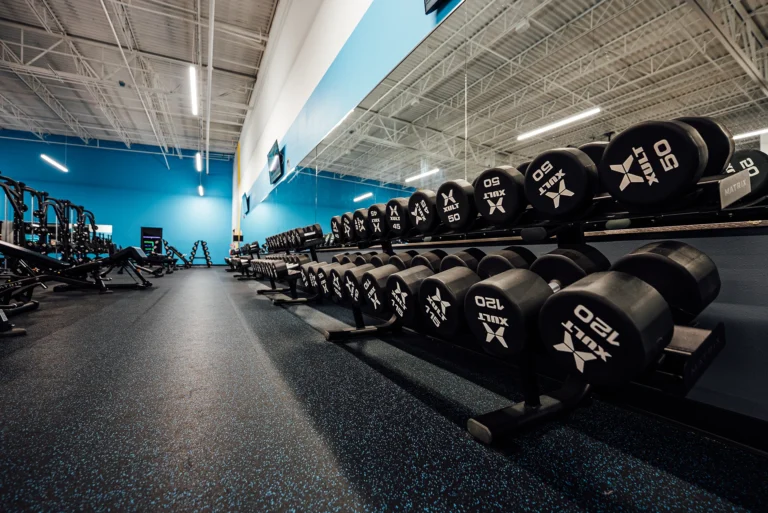


A workout split is a weekly training structure that assigns specific muscle groups or movement patterns to specific days instead of training your whole body every session. The three most common types are full body, upper-lower, and push-pull legs. The right one for you depends mainly on how many days a week you can realistically train.
What Is a Workout Split?
A workout split is a way of organizing your weekly training so that specific muscle groups or movement patterns get trained on specific days, instead of hitting your whole body in every session. Rather than walking into the gym and doing whatever feels right that day, a split gives you a repeatable structure. It tells you what to train, how often, and how much rest each muscle group gets before you train it again.
This structure matters because muscles need time to recover and rebuild after a hard session. A workout split spreads that stress out across the week so no single muscle group gets hit too often, and none gets neglected either. In our experience training members at TruFit, understanding this idea first makes it much easier to stick with whatever split you choose next.
What Are the Main Types of Workout Splits?
Most training splits fall into a handful of proven categories. Each one suits a different training frequency and experience level, and understanding the tradeoffs makes it much easier to pick one with confidence.
What Is a Full Body Split?
A full body split trains most major muscle groups in every session, typically two to three times per week, with a rest day in between. It’s the simplest split to follow and works well for beginners, or for anyone who only has a few days available to train. We typically start new TruFit members on a full-body split for their first four to six weeks, since it’s the most forgiving structure while they build a consistent training habit.
What Is an Upper-Lower Split?
An upper-lower split alternates between upper body sessions covering the chest, back, shoulders, and arms, and lower body sessions covering the quads, hamstrings, glutes, and calves. This structure typically runs on a four-day schedule, and our 4-day workout split guide breaks down exactly what that week can look like, though it also scales up to six days for more advanced lifters. When our coaches move a member onto this split, we usually pair the extra days with mobility work or a group fitness class rather than complete rest.
What Is a Push-Pull Legs Split?
The push-pull legs split organizes training around movement patterns rather than individual muscles. Push days cover the chest, shoulders, and triceps, pull days cover the back and biceps, and leg days cover the quads, hamstrings, glutes, and calves. If hamstring development is a priority on leg day, our guide to hamstring exercises covers movements that pair well with this split. This split works well at three days a week and scales cleanly to six, making it a popular choice for people who want to train frequently and prioritize specific lifts.
What Is a Body Part Split?
Often called a bro split, this approach dedicates each session to one or two muscle groups, training each one directly just once per week. According to the National Academy of Sports Medicine, this style remains popular in bodybuilding circles even though research on optimal training frequency doesn’t always support it. Because a body part split rarely sets aside dedicated time for core work, pairing it with a few sessions from our ab workouts guide can help keep that area from falling behind.
How Do You Choose the Right Workout Split?
- Count your realistic training days. Most people overestimate how many days they will actually train. Base your choice on the number of days you can hit consistently for the next three months, not the number you can hit during a good week.
- Match the split to your experience level. Beginners generally see excellent results from full-body training two or three times a week. A 2019 systematic review by Schoenfeld, Grgic, and Krieger, published in the Journal of Sports Sciences, found that major muscle groups should be trained at least twice per week to maximize growth, which favors full body or upper-lower splits over once-a-week body part splits for most lifters.
- Build in real recovery time. The American College of Sports Medicine recommends at least 48 hours of rest for the same muscle group between hard training sessions. Whatever split you choose, check that it gives each muscle group that much recovery before you train it again.
- Pick the split you will actually enjoy. A technically ideal split you dread doing gets replaced by no training at all, while a slightly less optimal one you look forward to keeps you consistent for months.
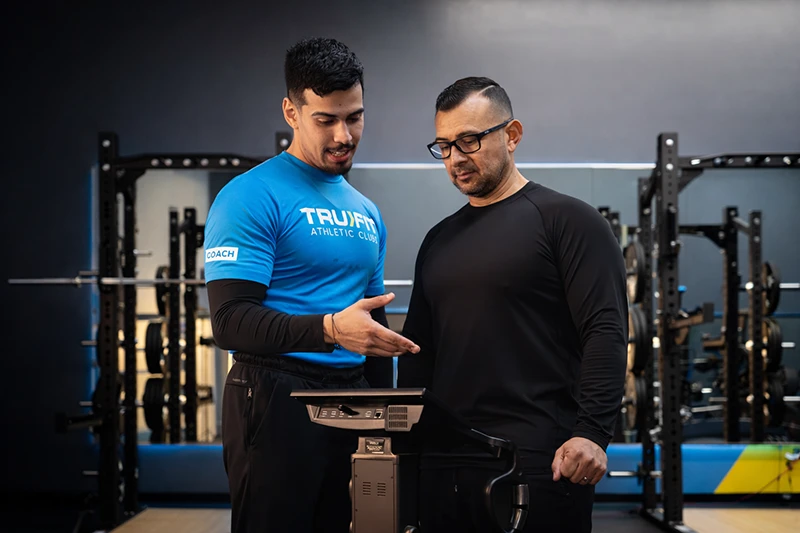
How TruFit Coaches Build a Split With You
Knowing which workout split fits your schedule is only half the job. Our coaches spend most of their first session with a new member reviewing exactly this: how many days they can commit to, what they have tried before, and where past programs broke down.
Frequently Asked Questions
What Is the Best Workout Split for Beginners?
A full-body split trained two to three times per week is generally the best starting point. It’s simple to follow, easy to recover from, and covers every major muscle group without requiring you to track multiple different workouts.
How Many Days a Week Should a Workout Split Cover?
This depends on your schedule and experience. Two to three days works well for a full body split, four days suits most upper-lower programs, and three to six days fits a push-pull legs structure. More days are not automatically better if you cannot recover between them.
Can You Switch Workout Splits Over Time?
Yes, and most lifters do. It is common to start with a full body split as a beginner, move to upper lower as you add training days, and eventually try push pull legs or a body part split as an advanced lifter chasing more targeted volume.
Is a Full Body Workout Better Than a Split for Building Muscle?
Not necessarily. Research comparing full-body training to split routines has found similar strength and muscle gains when weekly training volume is equal. The better option is the one that fits your schedule and one you can train consistently.
Do You Need Rest Days With a Workout Split?
Yes. Every effective workout split, including six-day programs, builds in at least one full rest day and gives each muscle group roughly 48 hours before training it again. Rest days are part of the program, not a break from it.