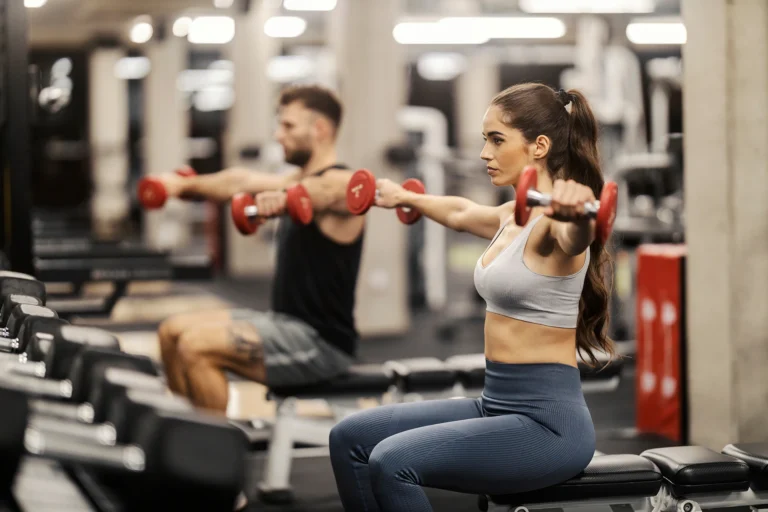

Strong hamstrings are essential for lower-body strength, athletic performance, and long-term joint health. They support your knees, power your stride, and help stabilize your hips. Yet they are often undertrained or trained incorrectly. If you want better results, the focus should be on a small number of effective movements done well. This guide breaks down seven of the most reliable hamstring exercises, along with practical tips to help you get more out of each one.
Muscles Worked in Hamstring Exercises
The hamstrings are made up of three muscles that run along the back of your thigh: the biceps femoris, semitendinosus, and semimembranosus. These muscles work together to extend your hips and bend your knees, which is why they are involved in so many lower-body movements.
Different hamstring exercises emphasize these functions in different ways. Romanian deadlifts and kettlebell swings focus more on hip extension, while leg curls target knee flexion. Training both patterns ensures complete development. Other muscles also support these movements. The glutes assist with hip extension, while the calves help stabilize the lower leg. A well-rounded approach improves coordination between these muscle groups and leads to better strength and performance.
Why Focus on Hamstrings?
The hamstrings play a key role in both hip extension and knee flexion. That means they are involved in everything from walking and running to lifting and jumping. Weak hamstrings can lead to imbalances, reduced performance, and a higher risk of injury. Top-performing fitness content consistently emphasizes combining different types of movements to fully train the hamstrings. That includes hinge patterns, curl variations, and unilateral work.
The 7 Best Hamstring Exercises
Each of the exercises below targets the hamstrings in a slightly different way. Together, they create a complete and effective training approach.
1. Romanian Deadlifts
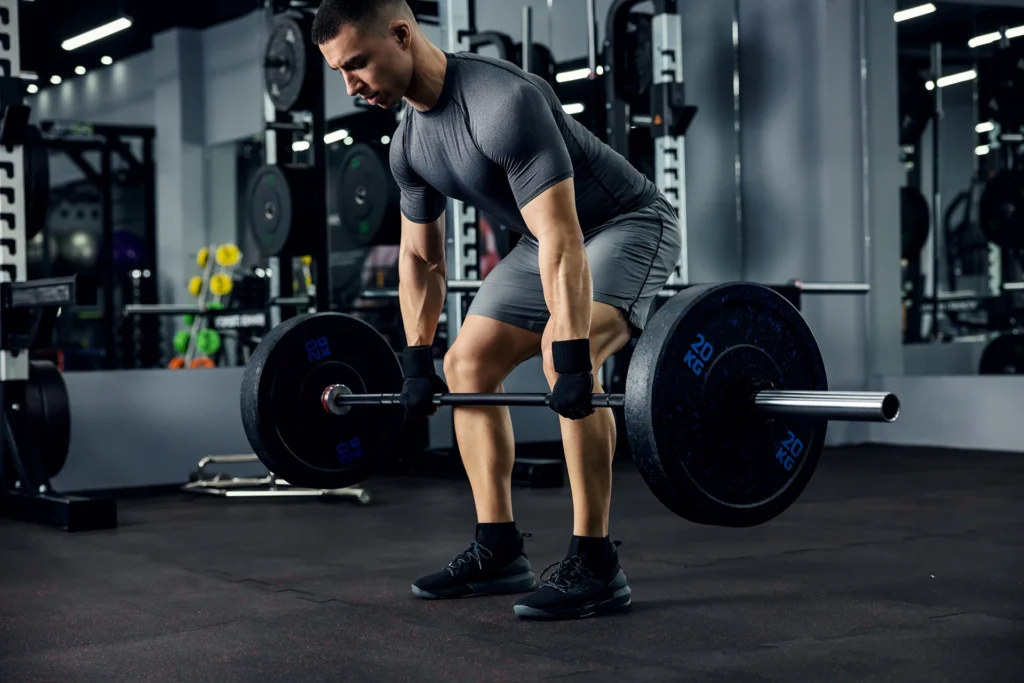
Romanian deadlifts are one of the most effective ways to build hamstring strength through a hip hinge. Start with a slight bend in your knees and push your hips back as you lower the weight. Keep your back flat and your core engaged. Lower until you feel a stretch in your hamstrings, then drive your hips forward to return to standing. This movement builds strength that carries over to everyday movement and athletic performance.
2. Lying Leg Curls
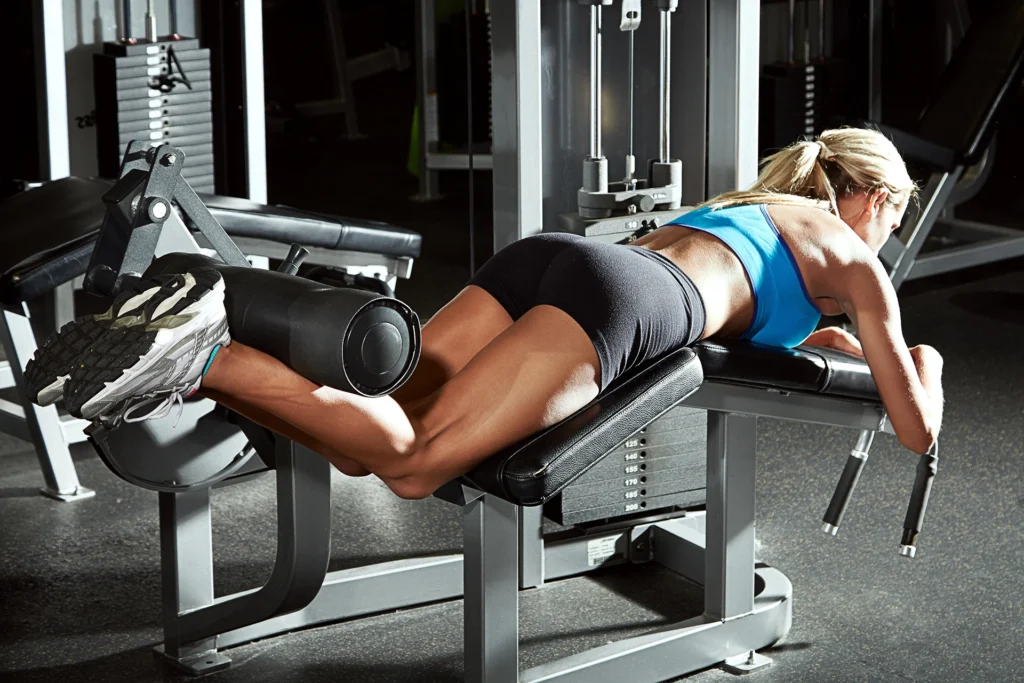
Lying leg curls isolate the hamstrings by focusing on knee flexion. Use a controlled tempo and avoid swinging the weight. Squeeze at the top and lower slowly to maintain tension. This helps fully engage the muscle and improves overall development. Isolation work like this complements compound lifts and ensures nothing gets overlooked.
3. Glute Bridges
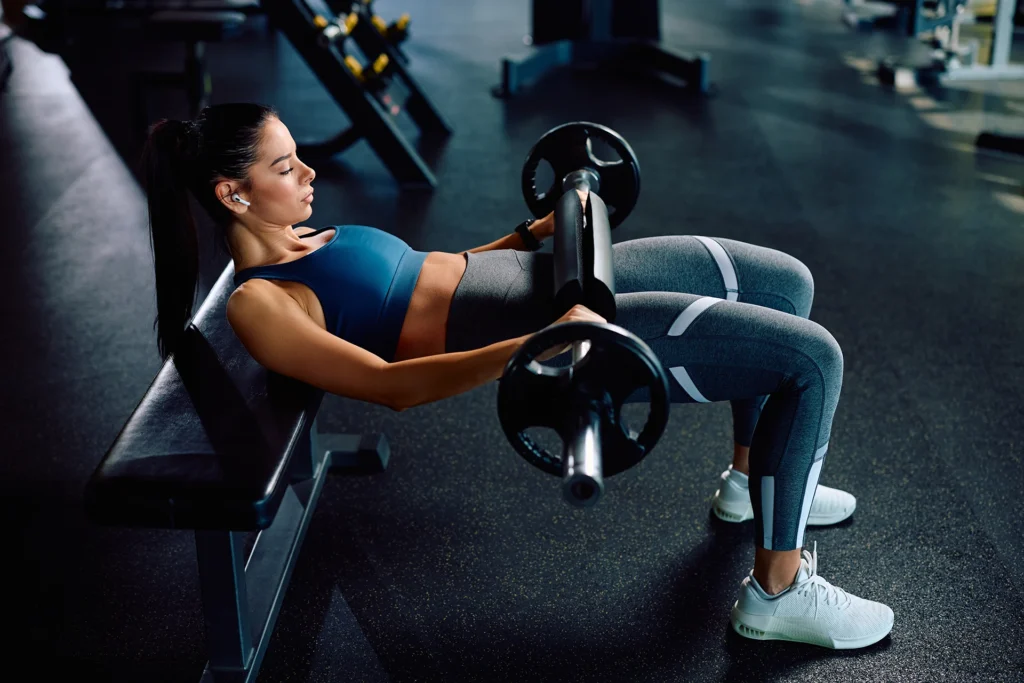
Glute bridges are simple but highly effective, especially for beginners. Lie on your back with your feet planted and push through your heels to lift your hips. Your body should form a straight line from shoulders to knees at the top. Although they target the glutes, the hamstrings play a strong supporting role, especially when performed with proper form.
4. Nordic Hamstring Curls
Nordic curls are one of the most challenging hamstring exercises you can do. With your ankles secured, slowly lower your body forward while keeping your torso straight. Use your hamstrings to control the descent as much as possible. This exercise builds eccentric strength, which is critical for preventing injuries and improving athletic performance.
5. Single-Leg Deadlifts
Single-leg deadlifts train each hamstring independently while improving balance and coordination. Keep your hips level and move slowly. Lower the weight while extending one leg behind you, then return to standing with control. This exercise helps correct imbalances and builds stability that carries into other movements.
6. Seated Leg Curls
Seated leg curls provide a different angle of resistance compared to lying curls. Because your hips are flexed, the hamstrings are placed under stretch, which can lead to better muscle activation. Focus on a full range of motion and controlled reps. Including both seated and lying variations can improve overall development.
7. Kettlebell Swings
Kettlebell swings add a dynamic element to your hamstring training. Drive your hips forward explosively while keeping your arms relaxed. The movement should come from your hips, not your shoulders. This exercise trains power and endurance, making it a great addition for overall performance.
Best Hamstring Exercises by Goal
Not every hamstring workout needs to look the same. Your goal should shape how you choose and perform each movement.
For Strength
If your focus is building strength, prioritize exercises that allow for heavier resistance. Romanian deadlifts and seated leg curls are strong choices because they let you progressively increase weight. Nordic curls are also effective due to their high level of difficulty and emphasis on control.
For Beginners
Beginners should focus on learning proper movement patterns. Glute bridges, light Romanian deadlifts, and basic leg curls help build coordination and awareness. Starting simple makes it easier to progress safely.
For Athletic Performance
Athletes benefit from movements that build power and stability. Kettlebell swings train explosive hip drive, while single-leg deadlifts improve balance and coordination. These exercises translate well to running, jumping, and quick directional changes.
Warm-Up for Hamstring Workouts
A proper warm-up prepares your muscles for work and reduces the risk of strain. It also helps you perform better during your workout.
Before starting your main lifts, spend a few minutes increasing blood flow and activating the posterior chain:
- Perform 10 to 15 leg swings per leg to loosen up the hips
- Practice bodyweight hip hinges to reinforce proper movement
- Add a set of light glute bridges to activate the hamstrings and glutes
Keep the pace controlled and focus on how the muscles feel. A good warm-up sets the tone for the entire session.
How to Combine These Exercises
You do not need to do all seven exercises in a single session. A better approach is to combine a few key movements into a structured routine. For example, you might pair Romanian deadlifts with leg curls and finish with single-leg work. On another day, you could include glute bridges and kettlebell swings for variety.
- Choose one primary strength movement
- Add one isolation exercise
- Include one unilateral or dynamic movement
This approach keeps your workouts balanced and effective without becoming overwhelming.
Signs Your Hamstrings Are Weak
Weak hamstrings often show up in subtle ways. You might notice frequent tightness, difficulty maintaining balance on one leg, or a tendency to feel exercises more in your lower back than your legs. Some people also struggle to perform hip hinge movements correctly, which limits their ability to train effectively. Recognizing these signs early allows you to adjust your training and focus on building strength where it is needed most.
Common Hamstring Training Mistakes
Many people include hamstring exercises in their routine but still fail to see results. The issue often comes down to execution. One common mistake is shifting the load to the lower back during movements like Romanian deadlifts. This usually happens when the hips are not pushed back properly. Focusing on the hinge pattern helps keep the tension where it belongs.
Another issue is cutting the range of motion short. Partial reps limit muscle activation and reduce effectiveness. Moving through a full, controlled range leads to better results. Rushing through repetitions is also a problem. Momentum reduces tension on the hamstrings. Slowing down each rep improves muscle engagement and control.
Tips for Better Results
Form matters more than weight. Slow, controlled reps help you feel the hamstrings working and reduce the risk of injury. Progress gradually by increasing resistance or reps over time. Consistency is what drives results, not constantly changing your routine. Recovery is also important. Stretching, mobility work, and rest days all contribute to better performance and long-term progress.
How Long Until You See Results?
Results depend on consistency, effort, and recovery. Many people begin to notice strength improvements within a few weeks of regular training. You may feel more stable during movements and more confident in your form. Visible muscle development takes longer and depends on factors like nutrition and overall training volume. Staying consistent with your hamstring exercises and gradually increasing difficulty will produce steady progress over time.
Train Your Hamstrings at TruFit Athletic Clubs
Having the right environment can make a big difference in your results. TruFit Athletic Clubs offer the equipment and support needed to perform these hamstring exercises safely and effectively. Are you ready to build stronger hamstrings and improve your performance?
Join TruFit Athletic Clubs Today
FAQ: Hamstring Exercises
- What is the most effective hamstring exercise?
Romanian deadlifts are often considered one of the most effective because they allow you to lift heavier weights while targeting the hamstrings through a full range of motion. - Can I train hamstrings every day?
Training every day is not recommended. Hamstrings need time to recover. Two to three sessions per week are usually enough for strength and growth. - Are bodyweight hamstring exercises effective?
Yes. Exercises like glute bridges and Nordic curls can be very effective, especially when performed with proper form and control. - How long does it take to strengthen hamstrings?
With consistent training, many people start to notice improvements in strength and stability within a few weeks. Long-term progress depends on consistency and progression. - Do hamstring exercises help with lower back pain?
They can help by improving muscle balance and supporting proper movement patterns. Strong hamstrings reduce strain on the lower back during daily activities. - Should I stretch my hamstrings before or after workouts?
Dynamic stretching works well before workouts, while static stretching is better after. This helps improve flexibility without reducing performance.