
The best lower ab workouts incorporate floor, cable, and hanging exercises, along with bottom-up movements like reverse crunches and hanging leg raises that draw your pelvis toward your ribs. You cannot isolate the lower abs from the rest of the muscle, but you can shift the emphasis there. Visible definition then depends on lowering overall body fat, not on rep count.
That last point is where most people get stuck. You finish a long set of crunches, your upper stomach is on fire, and the area below your belly button feels like it sat the whole thing out. The fix has two parts: train the lower fibers through their full range with the right movements, and manage body fat so the muscle you build actually shows. This guide covers three families of exercise that handle the first part. Floor work teaches control, cable work adds resistance, you can progress week to week, and hanging work gives the lower abs their longest range of motion. TruFit Athletic Clubs has the mats, cable stacks, and pull-up stations for all three.
Why are lower abs so hard to train?
Your six-pack muscle, the rectus abdominis, runs as one continuous sheet from your ribs to your pelvis. You cannot fire only the bottom half while the top stays quiet, and any coach who promises otherwise is selling something. What you can do is bias the work. When you anchor your upper body and bring your pelvis up toward your chest, the lower fibers do more of the lifting. Electromyography studies that measure muscle activation consistently show that movements bringing the pelvis toward the ribs, like reverse crunches and leg raises, recruit the lower portion of the rectus abdominis more than upper-focused crunches do. That is the basis for bottom-up training.
The second reason has nothing to do with the muscle. The lower belly is a common storage site for subcutaneous fat, so you can build genuinely strong lower abs and still not see them. Spot reduction is a myth: controlled studies in which participants train one limb for several weeks consistently find that fat loss spreads across the body rather than localizing to the trained area. Definition comes from lowering overall body fat through consistent training and nutrition. A strong lower core also stabilizes the spine during compound lower body exercises and supports posture, which is reason enough to train it regardless of how your stomach looks. When I cue this with clients at TruFit, the people who stop chasing a daily ab burn and start training the area twice a week with real resistance are the ones who see change.
Floor exercises for lower abs
Floor work is where you learn to control your pelvis, and that control is the foundation for everything else. The most important cue here is the posterior pelvic tilt, which means gently flattening your lower back into the mat by drawing your pubic bone up toward your ribs. The same pelvic control carries over to glute exercises and hip hinge work. At TruFit, we coach it as “stamp your lower back into the floor and zip the front of your hips up toward your sternum.” Lose that, and your hip flexors take over, which is exactly why so many people feel leg raises in their thighs instead of their abs.
The reverse crunch teaches the pattern best. Here is how to perform it cleanly:
- Lie on your back with your knees bent and stacked over your hips, arms flat at your sides.
- Stamp your lower back into the mat to set the posterior pelvic tilt before you move.
- Use your abs to curl your pelvis off the floor so your knees travel toward your face.
- Pause for a beat at the top where your hips are highest.
- Lower with control over three full seconds rather than letting gravity drop you. Repeat for 12 to 15 reps.
From there, build out the rest of your floor session with these lower ab exercises:
- Dead bug: lie on your back, extend an opposite arm and leg while keeping your back glued to the mat, then switch sides. This exposes weak deep-core control fast.
- Flutter kicks: keep your lower back pinned and your feet a few inches off the floor while alternating small up-and-down kicks.
- Lying leg raises: only progress to straight legs once you can keep your back flat throughout, dropping to bent knees the moment form breaks.
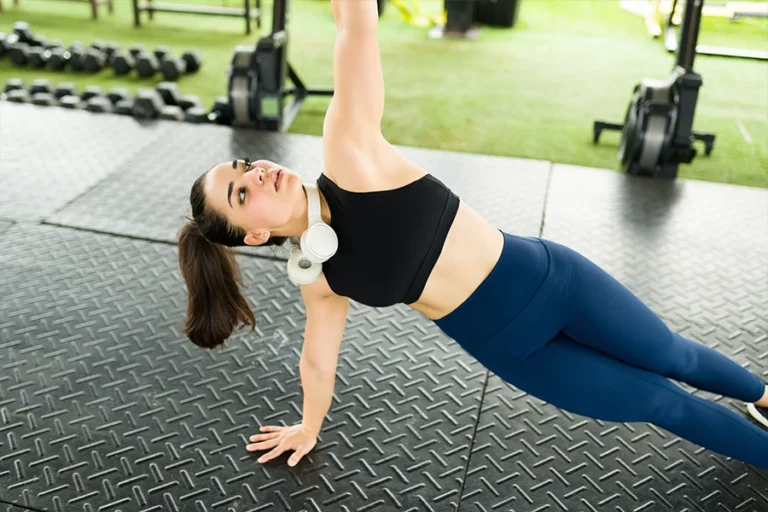
If you want to train the sides of your core alongside the front, build in a session of dedicated oblique exercises so the whole midsection develops evenly.
Cable exercises for lower abs
Bodyweight floor work has a ceiling. Once leg raises and reverse crunches stop challenging you, the cable stack is how you keep progressing, because you can add five pounds at a time and force the muscle to keep adapting. This is the part of lower ab training most home routines and most competing articles skip entirely, and it is one of the biggest reasons progress on the floor of a TruFit club outpaces floor-only home programs.
The cable reverse crunch biases the lower fibers under load. Here is the sequence:
- Attach ankle straps to the low pulley and lie on your back with your feet toward the stack.
- Set a posterior pelvic tilt and bend your knees over your hips.
- Curl your knees up toward your chest against the resistance, leading with your pelvis rather than your feet.
- Lower under control until you feel tension return, without letting your lower back arch off the floor.
- Start lighter than your ego suggests, since momentum is easy to borrow on cables. Aim for 10 to 12 reps.
The Pallof press rounds out cable work by training the deep stabilizers. Hold the handle at your chest, step out to load the cable, and resist its pull to rotate you for 20 to 30 seconds per side. A client of mine who had trained for months on the floor but kept feeling leg raises in his hip flexors finally felt his lower abs working the week we moved him to cable reverse crunches, because the load forced the pelvic curl he had been skipping.
Hanging leg raises for lower abs
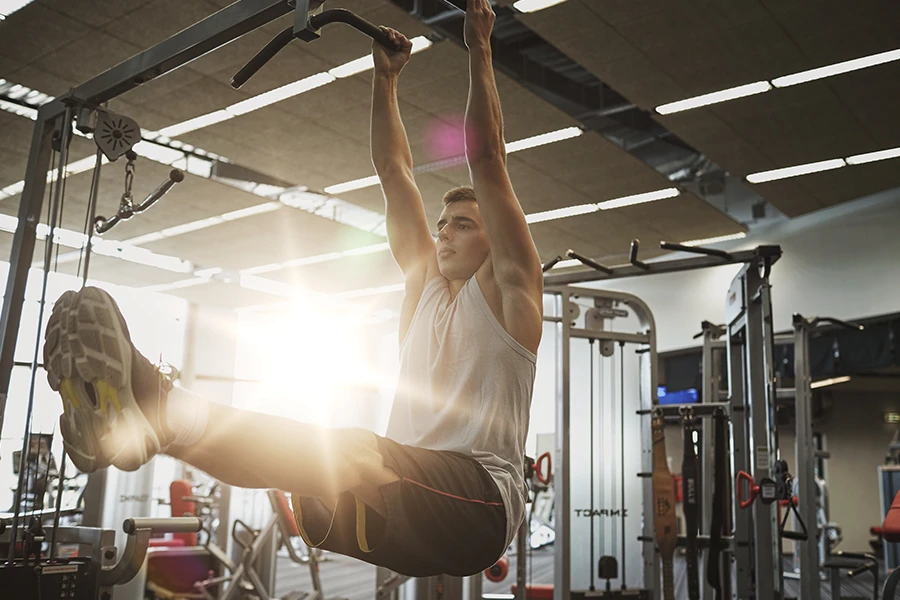
Hanging movements are the most advanced tier, and they reward the control you built on the floor. Because your legs hang in full extension below your torso, the lower abs work through a longer range than any floor or cable variation allows, which is why hanging leg raises appear on nearly every serious list of the best lower ab exercises.
Start with hanging knee raises and progress from there:
- Hang from a pull-up bar with a firm overhand grip and brace your core.
- Draw your knees up toward your chest, then curl your pelvis under at the very top so the abs finish the rep.
- Lower slowly and resist the urge to swing, since that swing trades ab work for momentum.
- Once knee raises feel controlled for sets of ten, straighten your legs as far as your flexibility allows.
- Stop each rep before your body starts to rock, and drop back to your knees the moment form slips.
If grip strength gives out before your abs do, captain’s chair raises on the vertical bench let you train the same pattern with your forearms supported, and TruFit has these stations on the floor. To round out a complete core, alternate this hanging work across the week with plank variations that train your midsection to stay rigid under load.
Sample lower ab workout
Pull one move from each family, and you have a session covering control, resistance, and range in about fifteen minutes. Train it two to three times a week on non-consecutive days, since the abs recover like any other muscle, and daily training tends to hurt progress. Run three rounds with roughly forty-five seconds of rest between exercises, adding reps or weight each week:
- Reverse crunches, 12 to 15 controlled reps, to wake up the pattern.
- Cable reverse crunches, 10 to 12 reps, at a weight that makes the last two genuinely hard.
- Hanging knee or leg raises, as many strict reps as you can manage before form slips.
If you are newer to structured core training and want the full picture of how upper, lower, and rotational work fit together, our broader guide to ab workouts lays it out.
Train your core at TruFit
Floor, cable, and hanging stations are all on the TruFit floor, with coaches who can check your pelvic tilt and keep your lower back safe while you build real lower ab strength. Book a free training consult and have a TruFit coach walk you through a personalized core progression in your first session.
Frequently Asked Questions
What is the best lower ab exercise?
There is no single best move, because the lower abs respond to variety. Hanging leg raises give the lower fibers the longest range and the most resistance from bodyweight alone, which makes them the most effective option once you have the strength and grip for them. For most people the reverse crunch is the best starting point, since it teaches the pelvic tilt every other lower ab exercise depends on.
Can you really target your lower abs?
You can emphasize them, but you cannot isolate them. The rectus abdominis is one continuous muscle, so every ab exercise involves the whole sheet to some degree. Bottom-up movements like reverse crunches and hanging leg raises recruit more of the lower fibers than standard crunches, which is why they belong in any focused lower belly workout.
Why are lower abs so hard to get?
Two reasons stack up. The lower belly is a common place to store subcutaneous fat, so the muscle stays hidden until overall body fat drops. On top of that, poor pelvic control lets the hip flexors hijack many lower ab exercises, so the muscle never gets trained properly. Fixing your form solves half the problem and managing body fat solves the other half.
How often should I train my lower abs?
Two to three sessions a week is plenty. Your abs need recovery time to adapt like any muscle, so daily training offers diminishing returns and raises injury risk. Space sessions on non-consecutive days and focus on quality reps with good control rather than chasing high numbers.
Do lower ab workouts burn belly fat?
Not directly. Targeted exercises build the muscle underneath, but they do not burn fat from the specific area you train, because spot reduction does not work that way. Losing lower belly fat comes from a sustained calorie balance supported by full-body strength training, cardio, sleep, and nutrition.