

A runner’s high is a short window of euphoria, calm, and reduced pain that shows up during or just after sustained exercise. It is real and measurable. The current evidence points to endocannabinoids, your body’s own cannabis-like molecules, rather than endorphins. Most people need roughly 30 minutes at 70 to 80 percent of maximum heart rate to trigger it.
If you have ever finished a hard session feeling weirdly wonderful, floaty, and like nothing much could bother you for the next hour, you were not imagining it and you were not just relieved to be done. Something specific happened in your bloodstream and your brain.
And here is the part that surprises people, including plenty of runners: you do not have to be a runner to get one.
Is runner’s high real, or is it just in your head?
It is real, and it is in your head, in the sense that researchers can watch it happen in a brain scanner.
In 2008, a study in Cerebral Cortex that scanned ten athletes twice, once at rest and once after two hours of endurance running averaging about 21.5 kilometers. Using PET imaging, they found reduced opioid receptor availability in prefrontal and limbic regions of the brain, meaning something had been released and bound to those receptors. Euphoria ratings rose significantly after the run, and the more euphoric an athlete felt, the more receptor binding had occurred.
So the runner’s high people describe is not a story they tell themselves afterwards. It tracks a measurable change in brain chemistry, in specific regions associated with mood and emotion.
What that study could not settle was which runner’s high chemical deserves the credit.
What causes a runner’s high?
The endorphin story, and why it fell apart
Endorphins are the body’s natural painkillers. They rise with exercise, and the Boecker study above found real opioid activity in the brain after a long run. So endorphins are doing something.
The problem is a molecule-sized one. Endorphins are relatively large and do not cross the blood-brain barrier easily. Measuring more endorphins in someone’s blood does not establish that more endorphins reached their brain. For decades the endorphin explanation rested largely on that blood measurement plus the fact that the timing lined up.
Then researchers ran the obvious experiment: block opioid receptors and see whether the runner’s high still happens.
The endocannabinoid story, and why it is winning
It still happens.
A 2021 study examined whether opioids play a role in the positive effects of exercise. Sixty-three healthy adults who exercised regularly completed two treadmill sessions at least 30 days apart. During each 45-minute session, participants either walked or ran at a moderate intensity after receiving either a 50 mg dose of an opioid-blocking drug or a placebo. The study used a randomized, double-blind design.
Running produced more euphoria and less anxiety than walking, along with higher endocannabinoid levels. Blocking opioid receptors did not prevent the runner’s high at all. Euphoria showed up in 7 of 32 participants on the blocking drug and 5 of 31 on placebo, which is to say the blockade changed nothing. The authors concluded that runner’s high in humans does not depend on opioid signaling, and named endocannabinoids as the strong candidate instead.
A 2015 study published in the Proceedings of the National Academy of Sciences found similar evidence in mice. Blocking cannabinoid receptors eliminated the calming and pain-reducing effects of running, while blocking opioid receptors did not. These findings suggest that the runner’s high may depend more on the body’s cannabinoid system than on opioids.
Endocannabinoids are small lipid molecules your body makes, and they act on the same receptor system that compounds in cannabis act on. The one that responds most consistently to exercise is called anandamide, sometimes nicknamed the bliss molecule. Unlike endorphins, these molecules move into the brain readily.
According to Johns Hopkins Medicine, where sports and performance psychologist Davy Phrathep discusses the topic, sustained aerobic exercise of 30 to 60 minutes increases endocannabinoid levels in the bloodstream, and these molecules act on some of the same receptors as compounds found in cannabis.
The honest summary: endorphins are probably part of the picture, particularly for pain relief. Endocannabinoids appear to be the main driver of the runner’s high itself.
What does a runner’s high feel like?
Not like being high on anything. The runner’s high feeling is subtler than the name suggests, which is partly why people miss it.
The commonly reported features:
- Effort stops registering the same way. The pace you were fighting for suddenly feels available.
- A wash of calm. Anxiety quiets down. This one is measured directly in the research as reduced anxiety, not just a nice feeling.
- Reduced pain sensitivity. Aches you noticed at minute ten are gone at minute thirty-five.
- Time distortion. You look up and eight minutes have passed instead of two.
- A lifted, slightly detached mood that outlasts the session, often by an hour or more.
What the runner’s high feeling is usually not: dramatic. Most people describe something closer to a quiet, spreading wellbeing than a rush. If you have been waiting for a lightning bolt, you may have already had several runner’s high experiences and filed them under “good workout.”
How to get a runner’s high: intensity and duration
This is where the research on how to get a runner’s high gets genuinely practical, and where most articles wave their hands.
Writing about their own review of the exercise and endocannabinoid literature, Raichlen and colleagues reported that moderate exercise intensity, such as cycling or running, raises endocannabinoid levels more effectively than lower-intensity work like slow walking or low-incline walking. Their practical conclusion: keep your heart rate between about 70 and 80 percent of age-adjusted maximum for at least 30 minutes.
That gives you an actual target rather than a vibe.
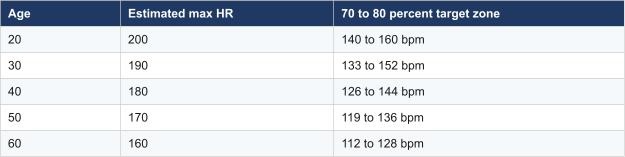
Maximum heart rate is estimated as 220 minus your age, which is a rough formula that can be off by fifteen beats in either direction. If you have no monitor, use the talk test instead: this zone is where you can speak in short sentences but not hold a proper conversation.
Four rules that follow from the evidence:
- Thirty minutes is the floor, not the target. Both the Johns Hopkins figure of 30 to 60 minutes and the Raichlen recommendation of at least 30 minutes point the same way. Twenty minutes of hard work is a good workout and rarely enough for a runner’s high.
- Moderate beats both easy and maximal. A gentle stroll does not get you there. Neither does an all-out effort you can only hold for four minutes. The window is sustained and uncomfortable but manageable.
- Consistency raises your odds. In the Siebers study, running produced a runner’s high and walking did not, in people who already exercised regularly. Fitness determines what counts as your moderate.
- Stop chasing it. People who report it most often are people who train regularly for other reasons. Treating it as the point of the session is a reliable way to be disappointed.
Do you have to run to get a runner’s high?
No. This is the most useful thing in this article and the reason it is worth sending to someone who says they hate cardio.
In the same review, Raichlen and colleagues reported that the exercise-related boost in endocannabinoids showed up across different types of exercise, including running, swimming, and weightlifting, and in individuals both with and without preexisting health conditions.
The name is a historical accident. Distance runners described the runner’s high first and loudest, so it got their name. The mechanism is not fussy about which activity raised your heart rate for half an hour.
If you have spent years assuming the runner’s high was reserved for people who run marathons, it was not. It was reserved for people who kept their heart rate up for thirty minutes, which is a much larger and much less intimidating club.
Why don’t I ever get a runner’s high?
Several ordinary reasons why a runner’s high has not shown up for you, and none of them means your body is broken.
You are stopping too early. The most common one. Twenty-five minutes is close, and close does not count here.
You are going too easy. Comfortable is below the window. If you could hold a full conversation the whole time, you were under it.
You are going too hard. Sprinting yourself into the ground for eight minutes does not produce a sustained moderate stimulus. It produces eight hard minutes.
You are new. Early sessions are dominated by discomfort, unfamiliarity, and watching the clock. Give it several weeks of consistency before drawing conclusions.
You get a runner’s high and do not notice. Genuinely common. In the Siebers study only about a fifth of participants reported euphoria after a 45 minute run, which tells you this is not universal on any given session, even under near-ideal conditions.
Individual variation is real. Some people appear to respond more strongly than others, and the research does not yet explain why. This is one of the open questions.
The benefits that show up whether or not you feel euphoric
Worth saying plainly, because the runner’s high is the least reliable thing on this list.
The mood and anxiety effects of exercise do not require you to notice a distinct runner’s high. Reduced anxiety was measured in the Siebers participants as a group, not only in the seven who reported euphoria. In our experience at TruFit, the members who stay consistent for years almost never cite a dramatic high as the reason. They cite sleeping better, being easier to live with, and having a reliable place to put a bad day.
The runner’s high is a nice bonus on top of a set of effects that arrive far more dependably. If you show up three times a week and never once feel euphoric, you are still getting the large majority of what exercise does for your head.
Try one session in the window
The simplest experiment: pick one session this week, get your heart rate into the 70 to 80 percent range from the table above, and stay there for a full 35 minutes. Not a stroll, not an all-out effort. Sustained and slightly uncomfortable.
A TruFit personal trainer can find your actual working zone from a short test rather than a formula, which matters given how rough the 220 minus age estimate is. And when you are done, the Relax and Recovery area is a good place to sit with whatever you are feeling.
Not a member? Take a risk-free 3-day pass and run the experiment on us.
Frequently Asked Questions
Is runner’s high real?
Yes, a runner’s high is real. PET imaging in 2008 showed measurable changes in brain opioid receptor binding after a two hour run, correlated with self-reported euphoria, and a 2021 randomized trial measured increased euphoria and reduced anxiety after a 45 minute run alongside raised endocannabinoid levels.
What is the runner’s high chemical?
The runner’s high chemical is most likely an endocannabinoid, particularly anandamide, rather than an endorphin. Endorphins were the accepted explanation for decades, but when researchers blocked opioid receptors in humans the euphoria still occurred. Endorphins likely still contribute to pain relief.
How long does it take to get a runner’s high?
Roughly 30 minutes of sustained moderate exercise for most people, with 30 to 60 minutes cited as the range for raising endocannabinoid levels. A runner’s high rarely appears in sessions under 20 minutes.
How long does a runner’s high last?
A runner’s high typically runs from the back half of your session through to an hour or so afterwards. The broader mood lift often outlasts the sharper sensation.
Can you get a runner’s high from lifting weights?
Yes. Research on exercise and endocannabinoids has found the increase across running, swimming, and weightlifting. Keeping rest periods short enough to hold your heart rate up makes it more likely.
Is a runner’s high the same as being high on cannabis?
No, a runner’s high is not the same, though the receptor system overlaps. Endocannabinoids act on some of the same receptors as compounds in cannabis, which is where the comparison comes from, but the intensity and character are entirely different. Nobody has ever described the runner’s high feeling as intoxicating.
Does everyone experience a runner’s high?
No. In the 2021 trial only about one in five participants reported euphoria after a 45 minute run. Sensitivity varies between people and between sessions, and researchers do not yet know why.